Surface finishing has transformed from a labor intensive task to an engineering procedure that is precise. Today’s industrial landscape the quality of coatings has a direct impact on durability, corrosion resistance, as well as overall perception of the product. Many factories employ paint robots to enhance control and ensure consistency as global standards tighten up and customers demand flawless finish.
Modern paint robots bring controlled motion and programmable precision to applications that once depended on the skills of the operator. Automating the spray path and angle, as well as speed, eliminates a lot of imperfections that cause uneven film builds or excessive material use. This predictable coating process supports First Time Quality, and reduces the need to rework.
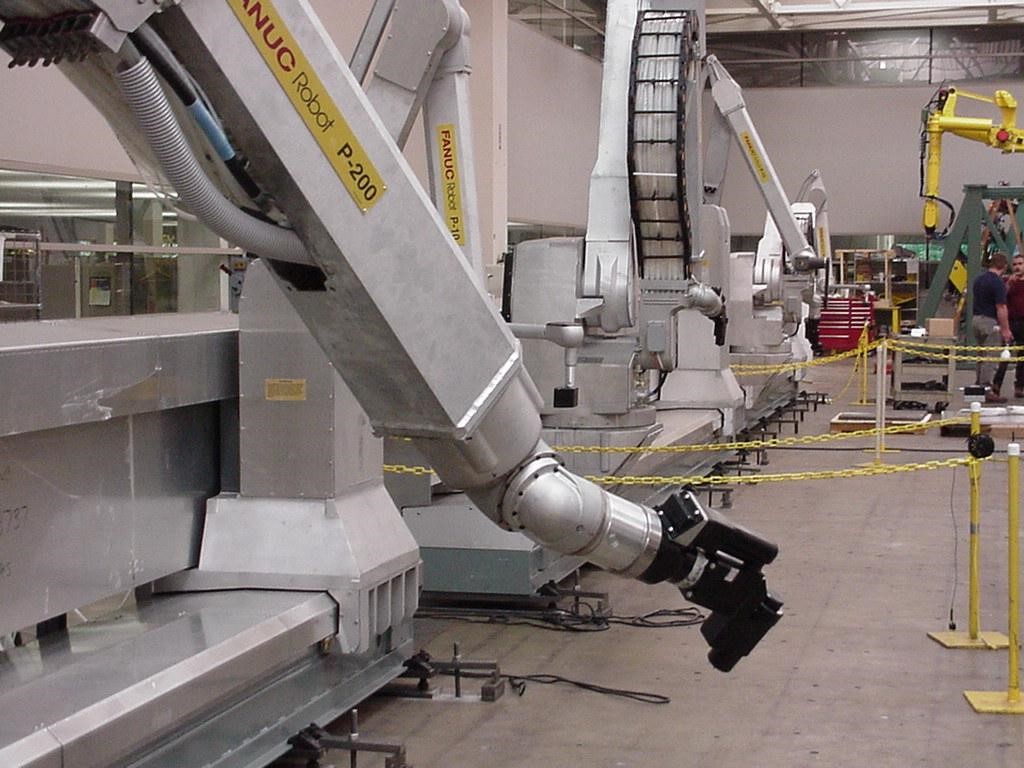
Image credit: automatedsolutions.com.au
Efficiency, consistency, and measurable improvements
Due to fatigue or even small variations in technique, hand painting can result in slight differences in coverage and thickness. Paint robots reduce this variation by using the same motion patterns during each cycle of production. This repetition level ensures an uniform surface finish and the best distribution of materials across every component.
A paint system that is robotic can also improve transfer efficiency. Overspray is minimized by ensuring a specific distance between the applicator, and the component. This allows more coating to reach the target surface. The reduction of material waste results in cost savings. The reduction in volatile organic compound emissions also contribute to environmental compliance.
Integrated fluid handling within paint robotics ensures accurate mixing ratios for multi-component coatings. This helps eliminate inconsistencies that could affect the integrity of finish. Stable flow control combined with parameter settings that can be programmed allows manufacturers to adjust the pattern of atomisation and spray without interrupting production.
Safety and productivity
The higher uptime is one important benefit of a paint robotic system. Unlike manual operations, robotic paint cells operate continuously with little interruption. Once programmed they can maintain constant throughput without breaks or monitoring.
It is crucial to think about safety when working in a facility which uses bi-component or solvent-based coatings. When dealing with reactive or explosive materials, atomised paints could create hazardous atmospheres. The latest paint robots have been engineered for safety in high-risk environments, helping reduce personnel exposure to hazardous substances as well as increasing safety standards in the workplace.
The conveyor tracking technology enhances productivity further, allowing for robot-controlled painting of parts while they are moving. This gives you a bigger working area, and also helps keep production lines operating efficiently.
Australian Automation Expertise Supporting Industry
It is essential that manufacturers are able to access automation partners who have experience. Automated Solutions, a leading robotic integration provider in Australia, has earned a reputation for offering advanced robotic solutions. With extensive knowledge in automation engineering, the team works as FANUC robotic integrators certified and assists businesses in implementing custom robotic paint solutions that match with their goals for operation.
Automated Solutions helps manufacturers evaluate their processes and develop robotized paint cells by combining experience from industry with technical expertise. Facilities will gain a greater understanding of the performance improvement process through the use of simulation, collaborative planning and system integration.
The adoption of paint robots isn’t only an issue of automation. It’s about making tangible improvements to quality, efficiency and security. Paint robots which are well-designed will transform finishing on surfaces into a repeatable, effective and controlled operation. With the assistance of knowledgeable professionals in automation, manufacturers are able to enhance their competitiveness, and position themselves for longevity in a demanding market.